Hacker Bird (Restoring 3D Model)

Hacker Bird (Restoring 3D Model)
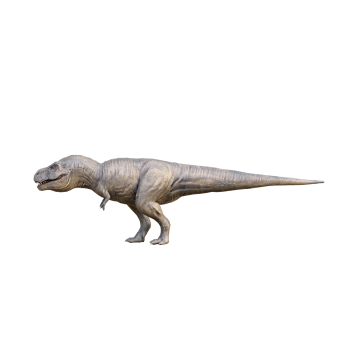
Phorusrhacidae is a large carnivorous bird species. The closest relative to them today is the crane family. The terror bird, also known as the terror bird, is a bird like carnivorous animal that lived alone during the same period as the saber toothed tiger. It is about 1-3 meters tall. Terror birds have hard leg bones and strong muscles, which can completely crush the bones of medium-sized prey and slowly feed on the nutrient rich bone marrow in the prey's bones. According to scientists' estimates, terror birds can reach speeds of up to 97 kilometers per hour, and the extinction of terror birds is believed to be related to wolf packs and disasters.
3D model of Tyrannosaurus rex with animation

3D model of Tyrannosaurus rex with animation

It is a giant carnivorous dinosaur that lived in the Late Cretaceous period. Known for its enormous size and powerful strength, Tyrannosaurus rex is one of the largest members of the Tyrannosauridae family. The head is huge, with strong jaws and sharp teeth, capable of easily tearing prey apart. The forelimbs are short and have two functional fingers and a degenerated third finger. The hind limbs are well-developed, supporting its massive body. It is estimated to be 11 to 13 meters long and weigh several tons, making it the top predator in the ecosystem at that time. Although many details about its behavior and ecological niche are still under study, Tyrannosaurus rex is undoubtedly one of the most famous and awe inspiring dinosaurs in history.
3D model of Tyrannosaurus rex with animation

3D model of Tyrannosaurus rex with animation

It is a giant carnivorous dinosaur that lived in the Late Cretaceous period. Known for its enormous size and powerful strength, Tyrannosaurus rex is one of the largest members of the Tyrannosauridae family. The head is huge, with strong jaws and sharp teeth, capable of easily tearing prey apart. The forelimbs are short and have two functional fingers and a degenerated third finger. The hind limbs are well-developed, supporting its massive body. It is estimated to be 11 to 13 meters long and weigh several tons, making it the top predator in the ecosystem at that time. Although many details about its behavior and ecological niche are still under study, Tyrannosaurus rex is undoubtedly one of the most famous and awe inspiring dinosaurs in history.
Fish Dragon Animation 3D Model

Fish Dragon Animation 3D Model

It is a marine reptile that lived during the Jurassic and Cretaceous periods, belonging to the ichthyosaur order, and was the top predator in the ocean at that time. The body is streamlined with a long and pointed snout, making it perfect for capturing fish and other marine creatures. The limbs have evolved into a shape similar to fish fins, allowing for rapid swimming in water. It can reach a length of several meters and was one of the largest predators in the ocean at that time. Fossils have been found in multiple regions around the world, providing valuable information for us to understand ancient marine ecosystems. Despite having the word 'fish' in their names, ichthyosaurs are actually reptiles with a close genetic relationship to dinosaurs.
Fairy pterosaur (with 3D animated model)
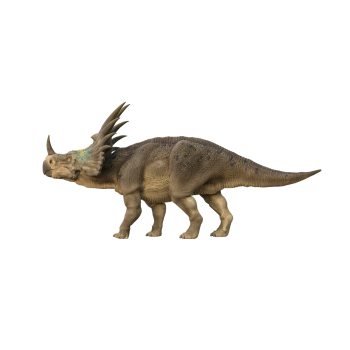
Fairy pterosaur (with 3D animated model)

It is a genus of pterosaurs in the Pterosauridae superfamily, a large pterosaur with a crown and no teeth. Fossils were discovered in the Santana Formation in Brazil, dating back to the early Cretaceous period. The appearance resembles that of a toothless pterosaur, with the adult individual's head crown extending from the snout to the back of the head. The head crown of a fairy pterosaur is larger and more prominent than that of a toothless pterosaur. Both males and females have large crests, but females have relatively round crests. The body length is 2.5 meters, the wingspan is 5.4 meters, and the length of the skull is 90 centimeters. They seem to live along the coasts of South America, feeding mainly on fish.
Halbersaurus 3D Model Animation

Halbersaurus 3D Model Animation

It is a dinosaur that lived in the late Jurassic period and belongs to the suborder Sauropod. Renowned for its enormous size and long neck, it was one of the largest land animals that ever existed on Earth. The skeletal structure suggests that they may be semi aquatic animals, living partially in water, which helps support their weight and reduce energy expenditure during exercise. The head is relatively small, with a long tail and strong limbs, with the forelimbs slightly longer than the hind limbs. Teeth have adapted to feed on plants, possibly relying on low vegetation as their main diet. Although the fossil record of Euphorbia is relatively limited, their existence provides us with important clues about ancient ecosystems.
Sword horned Dragon 3D Model Animation

Sword horned Dragon 3D Model Animation

Also known as the top horned dinosaur, it is a herbivorous dinosaur belonging to the suborder of thick headed dinosaurs in the order Ornithischia, and lived in North America during the Late Cretaceous period. Length of 2 meters. Originating from the swollen headed dinosaur family, it is a bipedal herbivorous dinosaur. The thick and round skull is the most prominent feature of stegosaurs. Due to the femur being slightly longer than the tibia, the running speed of Stegosaurus may not be fast. Like other dinosaurs in the Pachycephalosaurus family, Stegosaurus had a thick skull composed of many small bone fragments that covered its eyes and neck like a semicircle. At birth, the head is not very thick, and as age increases, the skull will become thicker.
Yitelong 3D Animation Model

Yitelong 3D Animation Model

It is a large carnivorous dinosaur that lived from the late Jurassic to early Cretaceous period. He was one of the most powerful predators on land at that time, known for his enormous size and powerful hunting ability. The body length is usually between 8 and 12 meters, and the weight can reach about 2 tons. Having strong hind limbs and sharp claws, it is very suitable for fast running and catching prey. The head is particularly large, with strong jaw muscles and sharp teeth, which can easily tear apart prey. Although their forelimbs are relatively small, they are still very powerful and can help them secure their prey during hunting. Fossils have been found in both North America and Africa.
Fiber horned dragon (with 3D animated model)

Fiber horned dragon (with 3D animated model)

It is a small ceratopsian dinosaur that lived in western North America during the Late Cretaceous period approximately 76 million years ago. The name comes from Greek and means' slender angular face ', which may refer to its relatively small head shield and horns. The body length is about 2 meters, and the estimated weight is between 68 and 200 kilograms. As a herbivorous animal, Ceratopsia may have fed on flowering plants, ferns, cycads, and pine and cypress plants at that time. Having a sharp beak shaped mouth, suitable for cutting plant leaves or needles. Fossils have mainly been discovered in Alberta, Canada and Wyoming, United States.
Deng's Fish 3D Animation Model

Deng's Fish 3D Animation Model

He was the top predator in the ocean during the late Devonian period (approximately 380 to 360 million years ago) and is known as the "king of the Devonian period". This ancient creature is known for its massive size and fierce appearance, with its head and neck covered in thick bone armor, and its jaw equipped with sharp edges resembling a guillotine, capable of cutting and crushing almost anything. Fossils are mainly found in the United States in North America, but have also been discovered in Europe. Living in shallow waters, preying on sharks, bony fish, trilobites, ammonites, and parrots. As the first super predator after the emergence of vertebrates, it disappeared during the mass extinction in the late Devonian period.
3D animation of the secondary comb dragon model
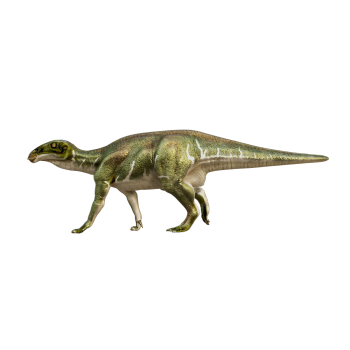
3D animation of the secondary comb dragon model

It is a type of dinosaur that lived during the Late Cretaceous period, belonging to the ornithischian order, hadrosauridae family. Famous for its unique head features, which include a hollow coronal bone extending backwards, which may be used for vocalization or visual display. Medium size, with a body length of about 9 meters and a weight of up to 2 tons. The body structure adapts to living in open forests and swamps, feeding on plants. Fossils are mainly found in North America, especially in Alberta, Canada and New Mexico, United States. This type of dinosaur holds significant importance in the field of paleontology as it provides important clues about dinosaur behavior and social communication.
Iguanodon (with 3D animated model)

Iguanodon (with 3D animated model)

It is a type of dinosaur that lived in the Jurassic period, belonging to the bird hipped dinosaur order. Its name comes from Greek, meaning "ostrich lizard", mainly because they have long legs and running ability similar to ostriches. Large in size, generally up to 10 meters in length and 3 meters in height. The head is relatively small with a beak shaped mouth, suitable for chewing plants. The tail of the avian dragon is long and strong, which can be used to maintain balance or as a defensive tool. It is a social animal that feeds on plants and mainly lives in forests and swamps. The forelimbs are relatively short, with five fingers, but the thumb is particularly developed, forming a sickle like structure for defense or digging.
Dragon King Animation 3D Model

Dragon King Animation 3D Model

Dracore, scientific name, is a genus of dinosaur in the family Pachycephalosauridae, which lived in North America during the Cretaceous period. It is a herbivorous dinosaur with small nail horns and lumps covering its skull, and a long mouth and nose. There is a well-developed upper temporal bone hole and a flat skull with thick armor, but it lacks the round arch of the thick headed dinosaur family. In addition, it also has a large amount of intradermal ossification, which is arranged in an irregular form: numerous nodules, small horns, and spikes. Although Dragon King Dragon existed during the Cretaceous period, the latest research suggests that Dragon King Dragon and Styx Dragon are ancestors of the swollen headed dragon, gradually evolving from each other.
Kaijiaolong (with action 3D model)

Kaijiaolong (with action 3D model)

It is a type of dinosaur that lived in the late Cretaceous period and is known for its unique head features, namely one or more pairs of large bony horns at the back of the skull. These horns are usually spear shaped and very spectacular. The ceratopsian dinosaurs belong to the bird hipped order and are a large group within the dinosaur family. They have a large body size, usually with strong limbs and thick skin, as well as a wide jaw and sharp teeth, suitable for chewing hard plants. Fossils of ceratopsian dinosaurs have been found in North America and Asia, and are important materials for studying dinosaur evolution and paleoecological environments.
Trilobite Fossil

Trilobite Fossil

Trilobites are arthropods belonging to the order Tetraodontiformes in the phylum Arthropoda. The body is divided into three parts: head, chest, and abdomen; There is a carapace on the back, which is longitudinally divided into three pieces. The head is covered with a hard shell, called a cephalothorax; The central raised part of the head armor is called the head saddle, and the shape and size of the head saddle vary greatly depending on the type; The anterior part of the head saddle is the skull, on which there are eyes; There are also shells wrapped around the abdomen and tail. Named after the longitudinal division of the carapace on the back into three pieces. Widely distributed in ancient oceans, fossils are found on all continents today. I like to live in warm shallow sea areas and feed on algae, protozoa, and other organisms.
Fossil skull of terror jaw pig

Fossil skull of terror jaw pig

The terror pig, also known as the terror pig, has a slightly larger body size than the giant pig and the complete toothed pig, and is an extremely large species in the giant pig family. Between 5 and 23 million years ago, the terror pig was the largest member of the Auchenipteridae family in history. It had huge tusks and jawbones, was an omnivorous species, and had a body size similar to that of a rhinoceros. It was more ferocious than modern wild boars and was named after its previous name, Dinohyus, which means "terror pig" in Greek. Their living habits are similar to those of ancient giant pigs and porcupines. The staple food of the terror pig is plants, but it also often eats decay or attacks small animals, as well as snatching food from small carnivores.
Fossil skull of canine toothed beast

Fossil skull of canine toothed beast

Cynodont, the ancestor of mammals. More like mammals than reptiles. Some live in pairs in caves. Ancient creatures, only two large canine molars have been found in the petrified forest of Arizona. Most canines are carnivorous animals, with very few exceeding 90 centimeters in length. They have many similarities with mammals. Both canines and mammals can breathe while chewing food. They all have several different types of teeth. Like mammals, canines have whiskers and perhaps body hair. Dogtooth beasts have their limbs located beneath their bodies and can run quickly.
Teleosaurus

Teleosaurus

The true lizard crocodile existed as an animal in the early Jurassic period. Living in the sea. It has an extremely narrow and long mouth lined with many sharp teeth. The body length is about 3 meters. It closes its mouth, and these teeth interlock thousands of times, forming an ideal clamp that can catch smooth fish or squid. It may swim by twisting its slender body and tail, with its short forelimbs tightly attached to its body while swimming.
Ichthyostega

Ichthyostega

The fish salamander is one of the oldest known terrestrial vertebrates and also the earliest known amphibian. According to the discovered fossils, they lived approximately 360 million years ago. Compared with the spiny salamander, the limb joints of the fish salamander are very flexible, and the ribs are wide, which is conducive to supporting its body to walk on land. Its spine has also grown joint processes, which can allow the spine to bend and move.
Giant Scorpion

Giant Scorpion

Giant scorpions are a type of scorpion from the Carboniferous period, with a body length exceeding one foot. They evolved from sea scorpions and can grow up to 1-3 meters in length. They are very similar to modern scorpions, with huge pincers and tail spines. Giant scorpions feed on giant spiders and arthropods. They should first use their tail spines to kill their prey, and then use their huge pincers to tear them apart. Later, it became extinct due to insufficient oxygen.
Cretaceous Velociraptor dinosaur small carnivorous dinosaur

Cretaceous Velociraptor dinosaur small carnivorous dinosaur

Jurassic Triceratops Dinosaur 3D Model
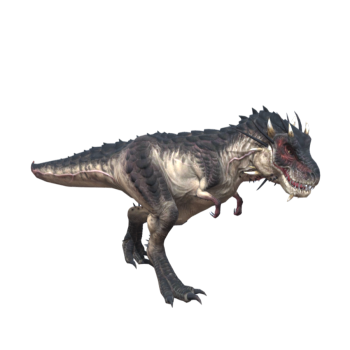
Jurassic Triceratops Dinosaur 3D Model

Realistic Tyrannosaurus Rex 3D Model

Realistic Tyrannosaurus Rex 3D Model

Meraxes Gigas Jurassic Dinosaur 3D Model

Meraxes Gigas Jurassic Dinosaur 3D Model

Paleontologists have described a new species of giant carnivorous dinosaur from a fairly complete skeleton in Patagonia, Argentina. The discovery could help shed light on the mystery of why such powerful predators have almost comical little arms. The new species, named Meraxes gigas, weighs more than 4 tons, is nearly 11 meters long and has a huge skull with a length of 1.3 meters.